The Fence Company

Research brief · August 2026

What’s actually working in fence marketing

The evidence points to a practical system: capture existing demand, remove buyer uncertainty, convert quickly, and make every finished fence produce local proof.

Best-supported channelGoogle high intent
Best company advantageQuote clarity
Best compounding loopJobsites + referrals
Conditional channelCold social
Executive finding

The channel is only one part of the system.

Google can create the opportunity, but it cannot rescue a slow response, a vague estimate, or a quote that looks impossible to compare. The strongest strategy connects acquisition, sales discipline, buyer education, and jobsite proof.

That is good news for The Fence Company. The harder-to-copy advantage is not a clever ad. It is the ability to show the property, scope, choices, and price clearly, then back it up with visible local work.

August 2026 platform watch

Google’s local lead product is changing.

Google is moving Local Services Ads into specialized Performance Max campaigns with pay-per-lead goals. Search and Maps placements remain, targeting remains keywordless, and the first U.S. categories begin moving in August 2026.

Fencing is not named in the first group. Export historical reports now, wait for the account notification, then recheck daily budgets, lead routing, service categories, and campaign-level targets after migration.

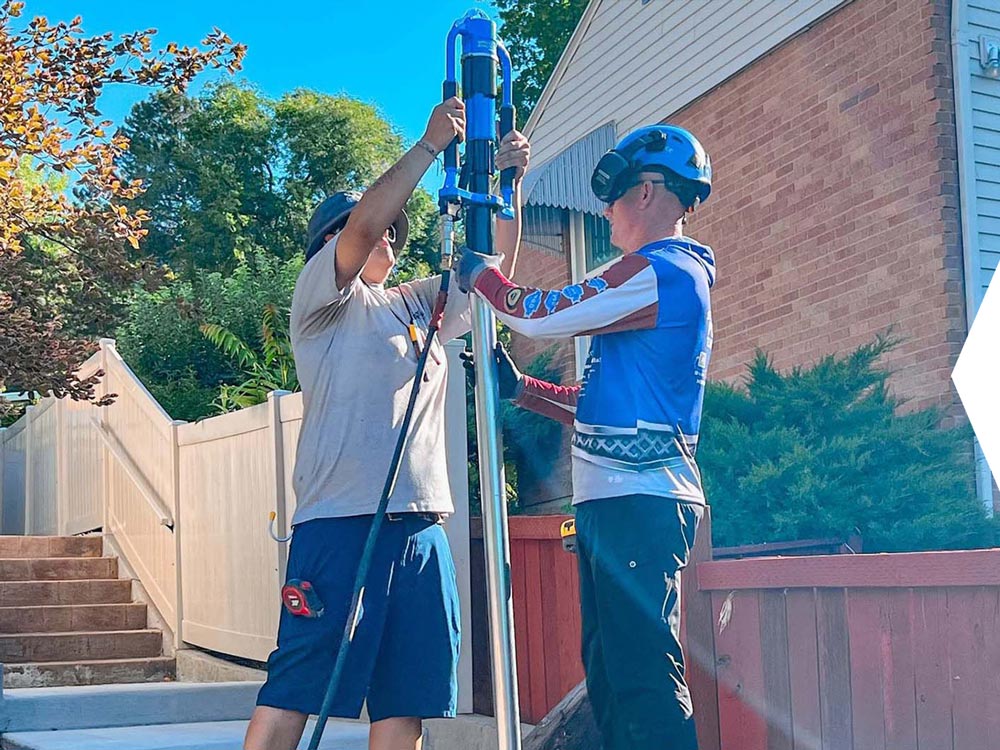
The Fence Company crew installing a fence post
An advantage we already own

Real work is the content.

The Fence Company already has the ingredients buyers trust: professional crews, recognizable installation methods, finished projects, and a strong guarantee. The opportunity is to distribute that proof more consistently at the moment buyers are comparing contractors.

Professional installationExpert craftsmanshipProject planning
Evidence-ranked findings

What appears to be working

Confidence is highest where primary platform guidance and large home-service datasets agree. Fence-specific operator reports add useful context, but are treated as lower-confidence evidence.

01Highest confidence

Capture buyers already searching

Google Search, Google Business Profile, and Google’s pay-per-lead local placement remain the clearest way to reach homeowners who are actively trying to hire a fence contractor.

What it means for us
Keep campaigns tight by fence type, service, and geography. Export Local Services history now and wait for Google’s account notice before changing the local campaign structure.
Why we believe it
Google still lists fencing as eligible. Invoca’s July 2026 benchmark says paid search drives the highest paid call, lead, and conversion volume.
02High confidence

Conversion discipline beats more traffic

Missed calls, slow callbacks, weak booking asks, and inconsistent follow-up quietly waste the demand a company already paid to create.

What it means for us
Instant acknowledgement, fast human response, a direct appointment request, and structured follow-up should be treated as part of marketing, not office cleanup.
Why we believe it
Across nine home-service subindustries, 52% of inbound calls reached a person, 38% of answered marketing calls were leads, 45% converted on the call, and 55% of businesses did not ask for the booking.
03Strong buyer signal

Quote clarity is a real differentiator

Fence buyers are not just shopping for a price. They are trying to understand whether bids are comparable and what expensive surprise might be missing.

What it means for us
A mapped plan, exact measured footage, installation specifications, responsibilities, exclusions, warranty, and written change-order rules can make The Fence Company easier to trust before it ever tries to be cheaper.
Why we believe it
Current buyers repeatedly focus on measurements, scope, warranties, and surprise extras. One July homeowner reported a $550 increase after the company failed to measure the exact footage.
04Fence-specific signal

Every installation can create the next job

In fencing, the finished product is visible to an entire neighborhood. Project signs, reviews, photos, nearby homeowners, and referrals compound that visibility.

What it means for us
Job closeout should include a review ask, project proof, a referral prompt, and attributable neighborhood follow-up using a unique number, short URL, QR code, or CRM source field.
Why we believe it
Current operator discussion supports yard signs and neighborhood visibility, but the evidence is anecdotal. This tactic must earn budget through booked work and sold gross profit.
What fence buyers care about

The sale is full of uncertainty

The most useful marketing answers the questions buyers already have. Generic posting cannot substitute for clear scope, real project proof, and an understandable quote.

01

Is this quote fair?

Buyers struggle to compare bids when footage, posts, gates, demolition, haul-off, and hardware are packaged differently.

02

What is not included?

The fear is often the change order: missing footage, access problems, rock, grade, utility conflicts, permit work, or disposal that appears later.

03

Whose line is it?

Property boundaries, surveys, easements, HOAs, permits, and utility locating are high-anxiety parts of the decision.

04

Which material is right?

Homeowners want the real tradeoffs between privacy, maintenance, durability, appearance, wind, pets, and price.

05

Can I trust the contractor?

Reviews, real local projects, warranties, communication, payment terms, and a credible website do more than generic content.

06

Should I do it myself?

The professional advantage becomes clearer when the estimate explains layout, grade, gates, posts, utilities, and long-term performance.

“The cheapest quote can quickly become the most expensive one if half the work is considered ‘extra.’”
Recommendations for The Fence Company

Five moves worth making

These are not a calendar. They are the highest-value capabilities suggested by the evidence, in practical priority order.

01
Do first

Own high-intent Google demand

Treat Google Business Profile, the pay-per-lead local product, and service-specific Search as one system. Export Local Services history before migration, then recheck lead routing, daily budgets, services, and campaign targets after Google moves the account.

Expected winMore qualified local opportunities—not just more form fills.
02
Best differentiator

Productize the Fence Plan

Replace the generic “free estimate” with a mapped layout, exact footage, material and installation specifications, gate details, responsibilities, exclusions, warranty, and written change-order rules.

Expected winA trust advantage that competitors cannot copy with ad spend alone.
03
Compounding move

Turn jobsites into neighborhood proof

Create one standard closeout routine: attributable project sign, review request, finished photos, neighbor follow-up, referral ask, and Google Business Profile update.

Expected winEach completed install lowers the cost of finding the next customer.
04
Build next

Fix response and booking discipline

Audit missed calls, after-hours inquiries, response time, appointment asks, and follow-up completion every week. A five-point lift across the answer, lead, and conversion stages produced about 38% more conversions in Invoca’s modeled baseline.

Expected winMore booked estimates from the demand already being generated.
05
Non-negotiable

Measure through sold gross profit

Connect source, response, qualification, estimate, follow-up, sold job, collected revenue, gross profit, contribution margin, cancellations, callbacks, and warranty cost.

Expected winA clear answer to what deserves more money, what needs fixing, and what should stop.
The strongest offer idea

The Fence Plan

See the measured layout, installation details, responsibilities, and price before you commit.

The plan should surface property-line, HOA, permit, access, and utility questions without representing itself as a legal survey.

  1. 01
    Map and measure

    Exact footage by run, fence line, gates, access, demolition, grade, and site constraints.

  2. 02
    Specify the build

    Material, profile, color, height, product line, post method, spacing, depth, concrete, and soil exceptions.

  3. 03
    Assign responsibilities

    Removal, disposal, grading, vegetation, irrigation, utilities, permits, HOA, survey, setbacks, and property lines.

  4. 04
    Control the finish

    Start window, duration, payments, warranty, punch list, allowances, exclusions, and written change-order approval.

How we know it works

Count profit, not “leads”

A lead only counts when it is in the service area, fits the work we want, and reaches a real homeowner or decision-maker.

01Lead received
02Human response
03Qualified opportunity
04Estimate scheduled
05Estimate completed
06Follow-up completed
07Job sold
08Revenue collected
09Gross profit
10Cancellation and warranty cost
Scale

Cost per sold job is inside the ceiling and the resulting gross margin is healthy.

Fix

Leads are qualified, but appointments, estimates, or close rates are weak.

Stop

The source cannot produce qualified local buyers after a sufficient test.

What the evidence does not support

Weak bets and expensive distractions

01

Broad cold social as the primary demand engine before booked-job economics are visible

02

Generic daily posting without a local proof or distribution strategy

03

Hundreds of thin AI-written city and service pages

04

Shared marketplace leads without closed-job economics

05

Agency reporting that stops at calls, forms, or platform conversions

How this research was built

Discovery first. Proof second.

Seven targeted passes covered July 21 through August 20, 2026 across community, social, video, news, and developer sources. The raw search produced 206 unique URLs before relevance filtering. Only evidence that directly supports or challenges a site claim was retained.

7Targeted research passes completed
30Days in the verified research window
206Unique raw URLs captured before relevance filtering
9Home-service subindustries in the current call benchmark
2Current fence-buyer discussions used for direct scope evidence
1Rule: a source must directly support or challenge a site claim
Scale behind the recommendations

Social signal was cross-checked against operating data.

The published benchmark datasets are broader than fencing alone. They establish directional channel and conversion patterns; current fence-buyer discussions shape how those patterns should be applied.

52%Inbound calls reaching a person

Nearly half of inbound calls failed to reach a human in the July 2026 benchmark.

38%Answered marketing calls that were leads

A strong reminder to separate real opportunities from raw call volume.

45%Leads converting during the call

Booking discipline determines how much paid demand becomes real opportunity.

55%Businesses not asking for the booking

The most direct conversion step is still missing in more than half of calls.

~38%Modeled conversion lift

Result of a five-point lift at each answer, lead, and conversion stage.

Counts from separate passes are not added together as if they were a deduplicated market sample. Social attention does not establish acquisition cost, close rate, or gross profit without first-party attribution. See the source notes below.